

Supreme Steel Supplies AISI 4330V Alloy Steel in Dubai and the Middle East
When a critical component fails, the cost is rarely limited to the part itself. Downtime, safety checks, urgent machining, delayed projects, and replacement logistics can all follow. That is why high-strength alloy steels are selected with care, especially in sectors where heavy loads, shock, fatigue, and temperature changes are part of daily operation.
AISI 4330V alloy steel sits in that category. It is known for its mix of strength, toughness, hardenability, and fatigue resistance. For industries across Dubai and the Middle East, access to the right grade, size, condition, and documentation can make a major difference.
Supreme Steel supplies AISI 4330V alloy steel in Dubai and the Middle East for demanding engineering, oil and gas, aerospace, defence, marine, and heavy equipment applications. The goal is simple: help buyers, fabricators, machine shops, and project teams source dependable alloy steel with the right technical support behind it.
What makes AISI 4330V alloy steel suitable for critical parts
AISI 4330V is a nickel-chromium-molybdenum-vanadium alloy steel. Each alloying element supports a specific performance need.
Nickel helps improve toughness. Chromium contributes to strength and wear resistance. Molybdenum improves hardenability and helps the steel perform better under demanding service conditions. Vanadium refines the grain structure and supports strength and fatigue performance.
Together, these properties make AISI 4330V useful where standard carbon steel or lower-alloy grades may not provide enough margin.
It is often chosen for components that need:
High tensile strength
Good impact toughness
Resistance to fatigue under repeated loading
Good through-hardening response
Machinability in the correct supplied condition
Reliable performance after heat treatment
This combination matters in parts that carry heavy loads or rotate at speed. Shafts, gears, axles, couplings, drilling parts, aircraft components, and high-stress mechanical parts are typical examples.
The value of AISI 4330V is not only in its chemistry. It is also in how the steel is made, treated, tested, and supplied. A good grade delivered in the wrong condition, without clear traceability, can create avoidable risk. That is where supplier experience becomes important.
Why Dubai and the Middle East need reliable alloy steel supply
Dubai has become a practical sourcing hub for engineering materials across the GCC, Africa, and wider Middle East. Its ports, industrial zones, transport links, and re-export network make it well placed for steel distribution.
At the same time, the region’s industries often work with tight schedules. Oil and gas maintenance windows are limited. Marine repairs can be urgent. Construction and infrastructure projects depend on planned deliveries. Machine shops need materials that match drawings and purchase specifications, not just a similar-looking grade.
AISI 4330V alloy steel is not a basic commodity item. It is a specialist grade. Availability can vary by size, form, mill origin, heat treatment condition, and certification. Buyers often need quick answers on whether material is available as round bar, forged bar, plate, or cut pieces.
Supreme Steel supports this need by supplying alloy steel to customers in Dubai and across the Middle East, helping teams match material requirements with application needs.
Common buyer concerns include:
Whether the material meets the requested standard or project specification
Whether mill test certificates are available
Whether the size allows for machining allowance
Whether heat treatment condition suits the intended process
Whether cutting, packing, and delivery can be arranged
Whether alternatives are suitable if an exact size is not immediately available
For critical applications, “close enough” is not a safe procurement strategy. The supplier must understand the difference between grade selection, certification, mechanical properties, and final part requirements.

Where AISI 4330V is commonly used
AISI 4330V is used where strength and toughness must work together. Some grades provide high hardness but become brittle. Others offer toughness but may not satisfy strength needs. AISI 4330V is selected when engineering teams need a better balance.
Oil and gas equipment
The oil and gas sector uses high-strength alloy steels in drilling, lifting, rotating, and pressure-related equipment. Components can face shock loads, wear, and harsh site conditions.
AISI 4330V may be considered for:
Drill string and downhole components
Heavy-duty shafts
Couplings and connectors
Tool joints and high-load mechanical parts
Components exposed to repeated stress cycles
Material selection in this sector often depends on project specifications, service conditions, and required testing. Buyers may need proof of chemistry, mechanical properties, impact testing, ultrasonic testing, or heat treatment details, depending on the application.
Aerospace and defence engineering
AISI 4330V has a history of use in aerospace-related applications due to its strength and toughness. Such applications demand strict control over material quality and traceability.
Possible use cases include:
Landing gear-related components
High-strength shafts
Structural mechanical parts
Defence equipment parts
Precision-machined components under high stress
In these sectors, certification and documentation are not optional. Material must be clearly traceable, and every stage after receipt, including machining and heat treatment, must follow approved procedures.
Marine, heavy equipment, and power applications
Marine and heavy equipment industries need steels that can handle load, vibration, and fatigue. Large shafts, pins, axles, gears, and rotating parts can benefit from alloy steels that respond well to heat treatment.
Power generation and industrial plant maintenance can also require high-strength replacement parts. In such cases, downtime is expensive, and sourcing speed matters. A supplier with access to alloy steel stock and cutting support can help reduce delay.
Forms, conditions, and service support buyers should check
Buying AISI 4330V is not just about asking for a grade name. The details matter. Before placing an order, it helps to confirm the material form, size, supplied condition, and technical requirements.
Common supplied forms
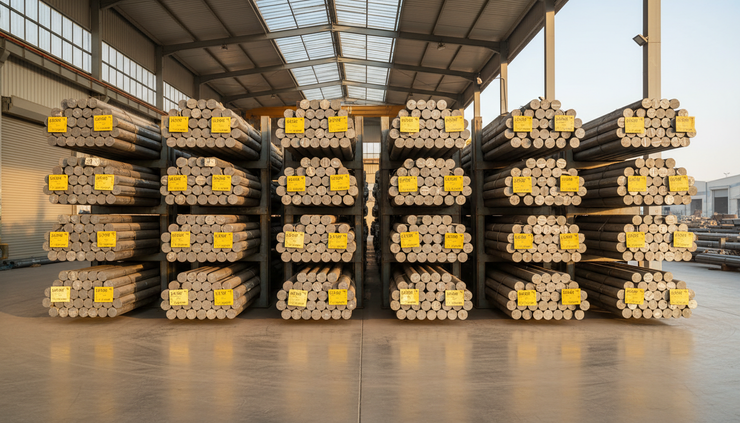
AISI 4330V can be supplied in formats such as:
Round bars
Forged bars
Flat bars
Plates, where available
Cut-to-size pieces
Blocks for machining
Round bars are common for shafts, pins, rods, and turned components. Forged bars or blocks may be used where internal soundness, grain flow, or larger section sizes are important.
Heat treatment condition
The supplied condition affects machining, hardness, and final mechanical properties. Depending on the order and application, AISI 4330V may be supplied in annealed, normalised, quenched and tempered, or other specified conditions.
Buyers should clarify whether they plan to machine first and heat treat later, or use material already treated to a defined property range. Each route affects cost, timing, machining behaviour, and inspection steps.
Machining allowance
Finished components rarely match raw bar size. A bar may need turning, grinding, drilling, boring, or milling. The purchased size should allow enough stock for machining and any surface removal required after heat treatment.
A practical procurement question is simple: will the supplied size clean up to the final drawing dimension?
That question becomes more important with expensive alloy steels. Ordering too close to finished size may save material cost but create scrap risk. Ordering too large may add machining time and waste.
Certification and inspection
For critical applications, buyers should request the right documents at the quotation stage. These may include mill test certificates, chemical analysis, mechanical test values, heat treatment records, and inspection reports where applicable.
Depending on project needs, additional testing may be required, such as ultrasonic testing or hardness checks. Requirements should be clear before the order is processed, especially when customers must comply with end-user or consultant specifications.

How Supreme Steel supports AISI 4330V procurement
Supreme Steel’s role is to make specialist steel sourcing clear, practical, and dependable. Customers often come with a drawing, a grade requirement, a size range, or a performance requirement. The supplier’s job is to help convert that need into the right material supply.
Support can include:
Checking grade and size requirements
Offering suitable available forms
Advising on stock and lead time
Arranging cutting to required lengths
Supporting documentation requests
Coordinating packing and dispatch
Supplying to Dubai and wider Middle East destinations
This matters because procurement teams do not always have time to manage every technical detail from scratch. A clear conversation early in the process can avoid delays later.
For example, a machine shop may request a round bar for a high-strength shaft. The drawing may specify AISI 4330V with heat treatment after machining. In that case, the buyer needs material in a condition suitable for machining, with enough allowance for final grinding. Documentation must match the job file. If the supplied bar is too hard, machining cost rises. If the bar is too small, the final shaft may not clean up.
A knowledgeable alloy steel supplier helps identify such issues before material is cut and shipped.
What to confirm before ordering AISI 4330V
A clear purchase enquiry saves time for both buyer and supplier. It also reduces the risk of receiving unsuitable material.
Before ordering, share as many of these details as possible:
Requirement | Why it matters |
Grade and standard | Confirms whether AISI 4330V or an equivalent grade is needed |
Form and size | Determines availability, cutting, and machining allowance |
Quantity | Helps check stock and delivery planning |
Supplied condition | Affects machining, hardness, and heat treatment route |
Application | Helps identify critical performance needs |
Certification | Ensures documents match project or inspection requirements |
Testing needs | Avoids delays if ultrasonic, hardness, or other checks are required |
Delivery location | Helps plan packing, transport, and export documentation |
If a project specification uses related names or alternative grade references, it is best to share the full document or drawing note. Alloy steel grades can look similar on paper but behave differently in service.
Why material traceability matters
Traceability connects the supplied material to its production and testing history. For general fabrication, this may be less strict. For critical alloy steel parts, it is often essential.
A proper traceability chain helps answer key questions:
Which heat or batch did this bar come from?
What was its chemical composition?
What mechanical properties were tested?
What heat treatment was applied?
Which inspection checks were completed?
Does the document match the marking on the material?
These questions are especially relevant for oil and gas, aerospace, defence, and heavy engineering work. They also help during audits, customer inspections, and failure analysis.
Material without reliable traceability may appear cheaper at first. The real cost appears when documentation is rejected, a component cannot be approved, or inspection teams ask for records that do not exist.
Handling, storage, and processing need care
High-quality alloy steel still needs proper handling. Poor storage, rough cutting, mixed stock, and unclear marking can create problems later.
Good practices include:
Keeping grade markings visible
Separating similar-looking grades
Protecting machined or cut faces where needed
Avoiding unnecessary impact damage
Recording cut pieces against original heat numbers
Using suitable cutting methods for the section size
After supply, the machine shop and heat treatment provider also play a major role. AISI 4330V must be processed correctly to achieve intended results. Incorrect heating, quenching, tempering, or cooling can affect hardness, toughness, and dimensional stability.
Welding also requires care. High-strength alloy steels can be sensitive to cracking if procedures are not controlled. Preheating, filler selection, and post-weld requirements should be reviewed by qualified welding engineers when welding is part of the design.

Supplying Dubai, GCC, and Middle East projects
Dubai’s position makes it a strong supply point for customers across the region. From local machine shops to contractors working across GCC markets, reliable steel availability supports faster project movement.
Supreme Steel supplies customers serving sectors such as:
Oil and gas
Petrochemical and process industries
Aerospace support
Marine engineering
Defence-related manufacturing
Heavy equipment maintenance
Precision machining
Industrial repairs
The supply requirement may be a single cut piece for urgent repair or a larger order for production. In both cases, accuracy matters. The grade, condition, size, paperwork, and dispatch plan should all line up.
For regional customers, packing and transport details also deserve attention. Bars and cut pieces should be packed to reduce damage during handling. Documents should be organised for smooth receipt and inspection at the destination.
A practical material choice for demanding engineering
AISI 4330V is not the right steel for every job. Many applications can use simpler and more economical grades. But when the component must handle high stress, repeated loading, impact, and demanding service conditions, this alloy becomes a serious option.
The best results come from matching three things:
Correct material selection
Reliable supply and documentation
Proper machining and heat treatment
Supreme Steel helps connect these steps by supplying AISI 4330V alloy steel in Dubai and the Middle East with a focus on practical sourcing support, technical clarity, and dependable service.
For buyers, the next step is to prepare the grade, size, condition, quantity, and certification requirements before requesting a quote. A clear enquiry leads to a better material match, fewer delays, and stronger confidence in the finished component.


Comments